Medically reviewed by the Sarv Health Team · Our editorial process
Passionflower for Sleep and a Racing Mind
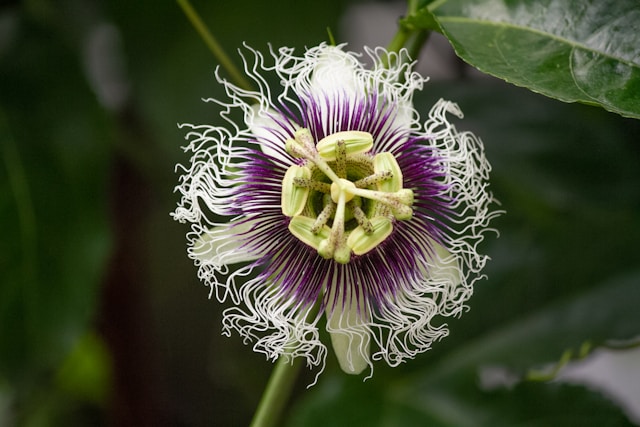
If your body is exhausted but your brain won't stop chattering, passionflower (Passiflora incarnata) is one of the first herbs worth trying. People have used it as a calming remedy for generations, and the research so far points more toward easing anxiety and mental restlessness than toward knocking you out. That is exactly what makes it a good fit for the kind of sleeplessness that comes from a mind that refuses to settle.
What is passionflower?
Passionflower is a climbing vine with dramatic, almost otherworldly flowers. It also goes by the name maypop, and it grows wild across much of the Americas. The medicine comes from the above-ground parts of the plant, mainly the leaves, stems, and flowers. Indigenous peoples used it long before it made its way into European herbals, and it has been valued ever since as a nervine, which is simply an old word for a plant that helps calm a frazzled nervous system.
Does passionflower actually help you sleep?
The honest picture is that the evidence is limited but encouraging, and it leans in a specific direction. The strongest research is for anxiety, not sleep as such. In one small pilot study, passionflower eased generalized anxiety about as well as a common prescription anti-anxiety drug, with less daytime drowsiness. Several other studies found it lowered nervousness in people about to have surgery or dental work. When it comes to sleep on its own, there is less to go on, though a small trial found that healthy adults who drank a cup of low-dose passionflower tea each night for a week reported better sleep quality.
Put those together and a pattern emerges. Passionflower seems to help sleep mostly by turning down worry and mental noise, rather than by sedating you the way a sleeping pill does. So it tends to shine when the real problem is a busy head at bedtime. Reviews still call for larger, better studies before anyone can promise results, so it is worth going in with steady expectations.
Why it quiets a racing mind
Researchers think passionflower works mainly by nudging up the activity of GABA, the brain's main calming signal. That is the same general system many anti-anxiety medications act on, though the plant's effect is far gentler. Compounds in the plant, especially flavonoids like apigenin, appear to be involved. One interesting detail from the research is that the whole-plant extract tends to work better than any single isolated compound, which is part of why herbalists favor using the whole herb. Nobody has fully mapped how it works, and that is a normal state of affairs for plant medicine.
How to take passionflower
You will find passionflower as a tea, a tincture, and in capsules. Common ways to use it:
- Tea. Steep about a teaspoon (roughly 2 grams) of the dried herb in a cup of hot water for around 10 minutes. A cup before bed is a good starting point, and it can be taken a couple of times during the day for nervous tension.
- Tincture. Follow the product label. A typical amount is around half a teaspoon, up to three times a day.
- Capsules or extract. Often somewhere around 150 to 300 mg of extract.
For sleep, take it 30 to 60 minutes before bed. For daytime anxiety, spread smaller amounts through the day. Passionflower also blends nicely with other calming herbs like valerian, hops, lemon balm, and chamomile, and it often shows up alongside them in bedtime tea and tincture formulas. As with any new herb, start with a low dose and see how your body responds before taking more.
Side effects and who should avoid it
Passionflower is generally well tolerated for short-term use, but a calming herb is still an active one. Possible side effects include drowsiness, dizziness, mild confusion or clumsiness, and occasional stomach upset. Very large doses can cause heavier sedation and, rarely, an irregular heartbeat. Until you know how it affects you, do not drive or use machinery after taking it. Talk to a doctor first, or steer clear of passionflower, if any of these apply to you:
- Pregnancy or breastfeeding. Passionflower may trigger uterine contractions, so it is best avoided.
- Giving it to a child. Get guidance from a qualified practitioner rather than guessing at a dose.
- Taking sedatives, sleep or anti-anxiety medication, or drinking alcohol. Passionflower can pile onto their sedating effect.
- Taking an MAOI antidepressant or St. John's wort. There is a real chance of interaction.
- Facing surgery. Like other sedating herbs, it is wise to stop beforehand and to tell your anesthesiologist you have been using it.
Long-term safety has not been well studied, so passionflower is best used in shorter stretches. Tell your doctor or pharmacist about it alongside anything else you take. And keep the bigger picture in view: any herb works better on a foundation of steady sleep habits and managed daytime stress. If insomnia or anxiety is severe or drags on for more than a few weeks, that is a reason to see a doctor, not to keep reaching for a supplement.
Is passionflower worth trying?
If your sleep trouble is really a "can't switch my brain off" problem, passionflower is a reasonable, gentle herb to start with. Its best evidence is for calming anxiety, with modest support for sleep on top of that. Go in with realistic expectations, mind the cautions above, and give it a little time.
Sources
- Memorial Sloan Kettering Cancer Center, "Passionflower" (About Herbs): https://www.mskcc.org/cancer-care/integrative-medicine/herbs/passionflower
- Janda et al. (2020), "Passiflora incarnata in Neuropsychiatric Disorders: A Systematic Review," Nutrients (PubMed): https://pubmed.ncbi.nlm.nih.gov/33352740/
- Ngan & Conduit (2011), "A double-blind, placebo-controlled investigation of the effects of Passiflora incarnata (passionflower) herbal tea on subjective sleep quality," Phytotherapy Research (PubMed): https://pubmed.ncbi.nlm.nih.gov/21294203/
- Medical News Today, "Passionflower for anxiety and sleep: Benefits and side effects": https://www.medicalnewstoday.com/articles/323795
Frequently asked questions
Does passionflower make you sleepy, or just calm?
Mostly calm. Passionflower leans toward easing anxiety and quieting mental chatter rather than acting as a heavy sedative, which is why it suits a racing mind at night. Some drowsiness is possible, especially at larger doses.
Can you take passionflower and valerian together?
Yes, and they are often combined in sleep blends, since both are calming herbs that work well as a pair. Because both add to sedation, start with low amounts, avoid mixing them with alcohol or sedative medications, and check with a professional if you take other drugs.
How long does passionflower take to work?
For in-the-moment calm, some people feel a cup of tea within an hour, which is why it is popular right before bed. For ongoing anxiety, the benefit tends to build over several days to a couple of weeks of regular use.
This article is for general wellness and educational purposes only and is not medical advice. Consult a qualified healthcare provider before using herbs — especially if you are pregnant, nursing, or taking medication.