Turkey tail
Trametes versicolor (Coriolus versicolor) · Polyporaceae
Reviewed by The Sarv Health Team · Updated June 29, 2026 · Our editorial process
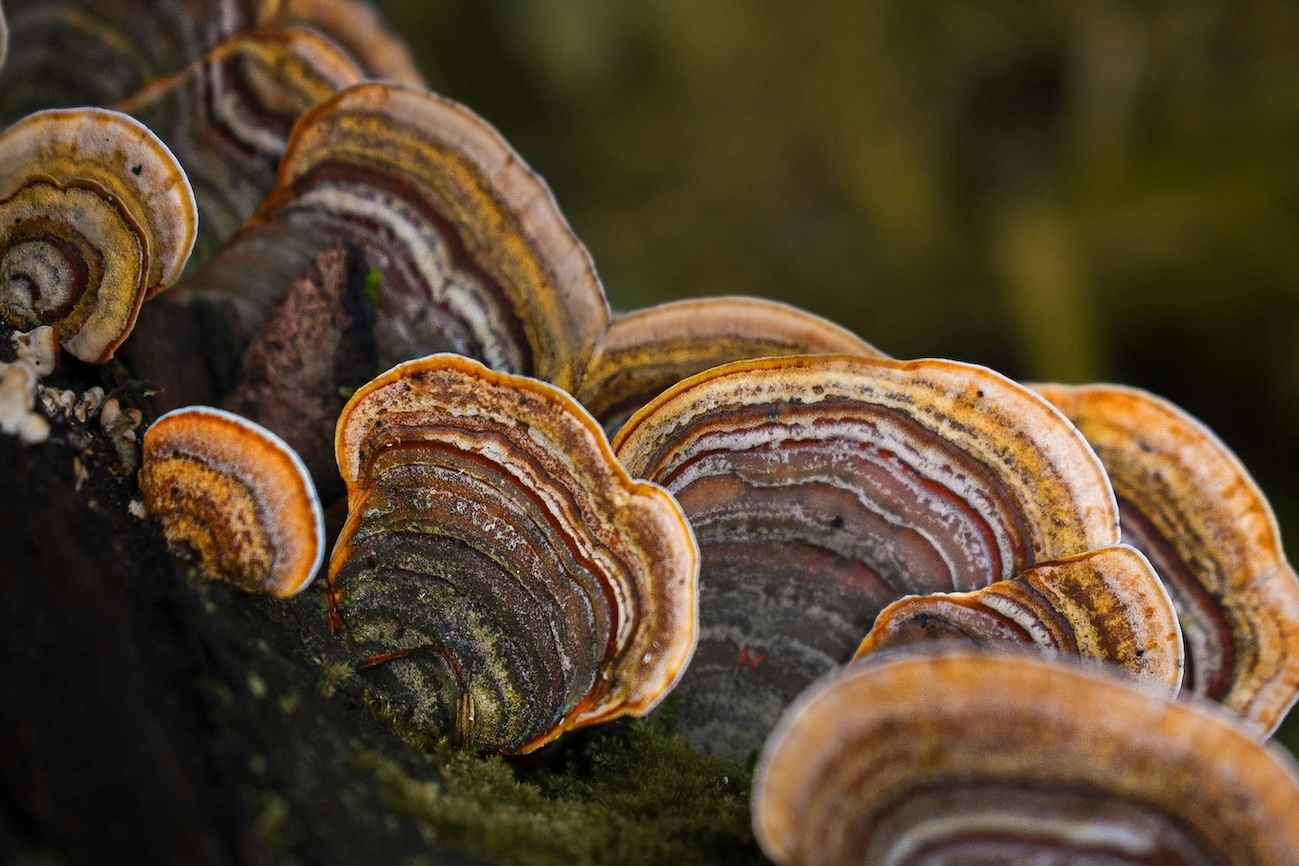
Turkey tail is one of the most widely researched medicinal mushrooms, named for its colorful, fan-shaped bands that resemble a wild turkey's tail. Long used in Traditional Chinese and Japanese medicine, it is prized chiefly as a potent immune tonic. Its signature compounds, the polysaccharides PSK (Krestin) and PSP, along with beta-glucans, stimulate and balance immune activity, which is why turkey tail extracts are used in Japan and China as a supportive therapy alongside conventional cancer treatment. The mushroom also acts as a prebiotic, nourishing beneficial gut bacteria and supporting healthy digestion and the gut-immune connection. In Traditional Chinese Medicine it is used to clear dampness and heat and to strengthen the lungs, liver, and spleen, making it useful in chronic infections and recovery from illness. With strong antioxidant, antiviral, and anti-inflammatory properties, turkey tail helps protect cells from oxidative stress and supports overall resilience, recovery, and longevity.
Medicinal Uses
Turkey tail is among the most studied medicinal mushrooms in the world, valued for centuries in Traditional Chinese and Japanese medicine and now backed by extensive modern research. Its therapeutic power comes from protein-bound polysaccharides, most notably PSK (polysaccharide-K, or Krestin) and PSP (polysaccharide peptide), as well as beta-glucans that act on the immune system.
The primary medicinal use of turkey tail is immune modulation. Rather than simply stimulating the immune system, its polysaccharides help balance immune activity, enhancing the body's ability to recognize and respond to pathogens and abnormal cells. In Japan and China, standardized PSK and PSP extracts are widely used as a complementary therapy alongside chemotherapy and radiation to support immune function and improve quality of life during cancer treatment.
Turkey tail is also a valuable ally for digestive and gut health. It functions as a prebiotic, feeding beneficial gut bacteria such as Bifidobacterium and Lactobacillus while discouraging harmful microbes. A balanced gut microbiome in turn supports stronger immunity, better digestion, and reduced inflammation.
In Traditional Chinese Medicine, turkey tail (yun zhi) is used to clear dampness and heat from the body and to tonify the lungs, liver, and spleen. It is traditionally applied in chronic respiratory conditions, lingering infections, and liver weakness, and is regarded as a restorative for those recovering from prolonged illness or fatigue.
Furthermore, turkey tail offers notable antioxidant, antiviral, and anti-inflammatory benefits. Its phenols and flavonoids help neutralize free radicals and reduce oxidative stress, while its antimicrobial action supports the body in resisting viral and bacterial infections. Together these properties make turkey tail a broad-acting tonic for immunity, recovery, and healthy aging.
Benefits
Modulates and strengthens the immune system, supports the body during cancer treatment, nourishes beneficial gut bacteria, improves digestion, supports the gut-immune connection, strengthens the lungs and liver, fights viral and bacterial infections, reduces inflammation, provides antioxidant protection, aids recovery from chronic illness, supports healthy aging
How to Use & Dosage
1/2 to 1 teaspoon (1-3 grams) of turkey tail powder, taken 1-2 times daily in food or drinks.
1000-3000 mg per day, divided into 1-2 doses.
2-4 ml (about 40-80 drops), taken 2-3 times daily.
Simmer 3-9 grams of dried turkey tail in water for 30-60 minutes. Drink 1-2 cups daily.
More Info
Frequently asked questions
What is Turkey tail used for?
Turkey tail is among the most studied medicinal mushrooms in the world, valued for centuries in Traditional Chinese and Japanese medicine and now backed by extensive modern research. Its therapeutic power comes from protein-bound polysaccharides, most notably PSK (polysaccharide-K, or Krestin) and PSP (polysaccharide peptide), as well as beta-glucans that act on the immune system. The primary medicinal use of turkey tail is immune modulation.
What are the benefits of Turkey tail?
Modulates and strengthens the immune system, supports the body during cancer treatment, nourishes beneficial gut bacteria, improves digestion, supports the gut-immune connection, strengthens the lungs and liver, fights viral and bacterial infections, reduces inflammation, provides antioxidant protection, aids recovery from chronic illness, supports healthy aging
How do you take Turkey tail?
Common preparations include powder, capsules, tincture, decoction. See the dosage guidance above, and consult a qualified practitioner for amounts suited to you.
This information is for general wellness and educational purposes only and is not medical advice. Consult a qualified healthcare provider before using any herb — especially if you are pregnant, nursing, or taking medication.
Learn more — more Pain Management herbs