Sea buckthorn
Hippophae rhamnoides · Elaeagnaceae
Reviewed by The Sarv Health Team · Updated June 29, 2026 · Our editorial process
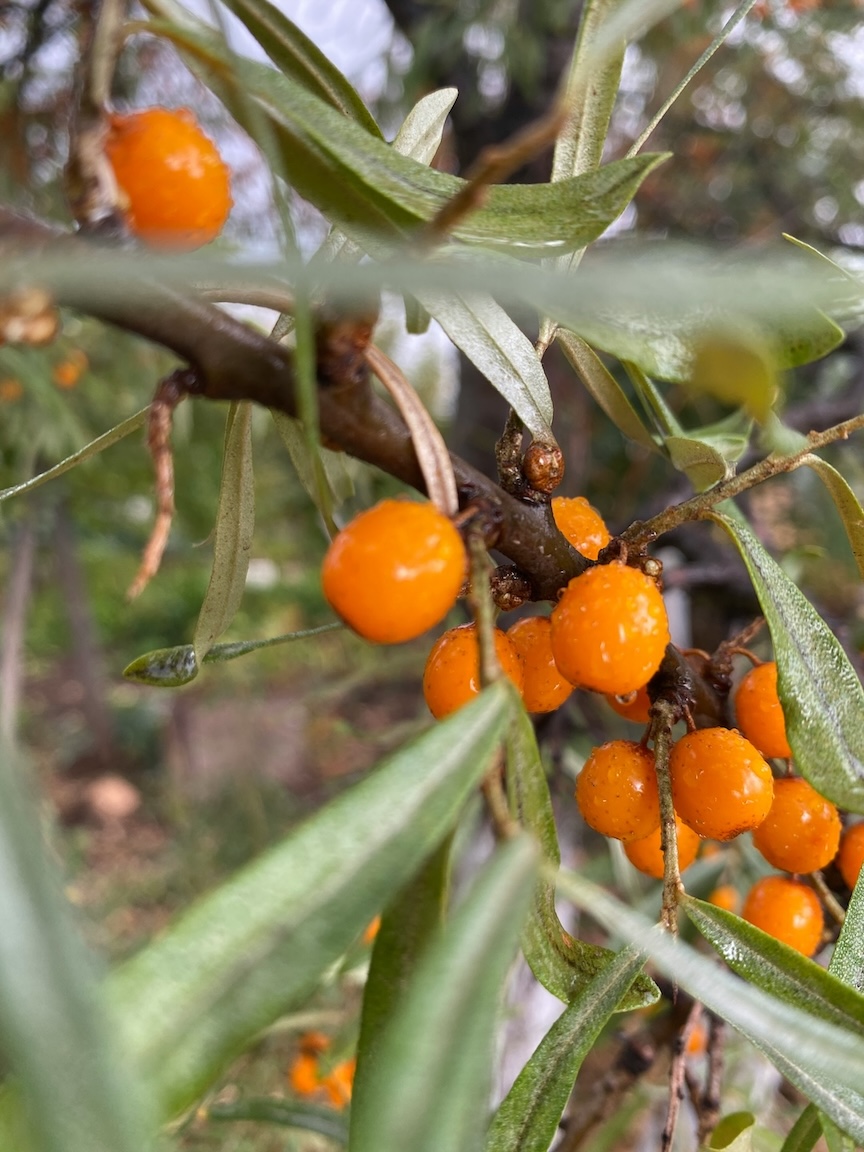
Sea buckthorn is a hardy thorny shrub whose vivid orange berries have been used for centuries in Tibetan and Central Asian medicine, where it is one of the most frequently prescribed remedies. The berries and seed oil are extraordinarily nutrient-dense, exceptionally rich in vitamin C, carotenoids, and the rare omega-7 fatty acid, which together make sea buckthorn a renowned tonic for the skin and mucous membranes. It is traditionally used to nourish and heal the skin, support wound and burn recovery, and soothe dry or irritated tissues throughout the body. In Tibetan medicine it is valued for supporting the lungs and easing cough, aiding digestion, and invigorating the blood. It also supports cardiovascular and liver health and provides strong antioxidant protection. Nourishing and protective, sea buckthorn is treasured as a tonic for the skin, mucous membranes, digestion, and overall vitality.
Medicinal Uses
Sea buckthorn is a thorny, cold-hardy shrub bearing brilliant orange berries that have been treasured for centuries in Tibetan and Central Asian medicine. In the Tibetan medical tradition it is one of the most commonly used plants, appearing in numerous formulas, and it is classified as supporting the lungs, blood, and digestion.
A foremost medicinal use of sea buckthorn is nourishing and healing the skin and mucous membranes. The berries and seed oil are exceptionally rich in vitamin C, carotenoids, vitamin E, and the rare omega-7 fatty acid (palmitoleic acid), which support the health, repair, and moisture of skin and the body's mucous linings. It is traditionally used to support wound healing, soothe burns, and relieve dryness and irritation of the skin, eyes, mouth, and other tissues.
In Tibetan medicine, sea buckthorn is particularly valued for the respiratory system, used to support the lungs, ease cough, and clear phlegm. It is also used to aid digestion, support healthy stomach and intestinal lining, and to invigorate the blood and resolve stagnation.
The berry further supports cardiovascular health by helping maintain healthy circulation and cholesterol, and it supports liver function. Its very high antioxidant content provides strong protection against oxidative stress and supports healthy aging.
Rich in vitamins, carotenoids, flavonoids, and a notable spectrum of fatty acids, sea buckthorn offers nourishing, healing, and antioxidant effects. Nourishing and protective, it is treasured as a tonic for the skin, mucous membranes, digestion, lungs, and overall vitality.
Benefits
Nourishes and heals the skin, supports wound and burn recovery, soothes dry and irritated mucous membranes, supports the lungs and eases cough, aids digestion, supports the stomach and intestinal lining, invigorates the blood, supports cardiovascular and liver health, provides rich antioxidants, promotes healthy aging
How to Use & Dosage
Steep 1-2 teaspoons of dried berries in hot water for 10-15 minutes. Drink 1-2 cups daily.
Drink 15-30 ml of sea buckthorn berry juice daily, diluted in water if desired.
Eat or take 5-15 grams of dried berries daily.
Take 1-3 grams (or as a few capsules) of sea buckthorn seed or berry oil daily; can also be applied topically.
More Info
Frequently asked questions
What is Sea buckthorn used for?
Sea buckthorn is a thorny, cold-hardy shrub bearing brilliant orange berries that have been treasured for centuries in Tibetan and Central Asian medicine. In the Tibetan medical tradition it is one of the most commonly used plants, appearing in numerous formulas, and it is classified as supporting the lungs, blood, and digestion. A foremost medicinal use of sea buckthorn is nourishing and healing the skin and mucous membranes.
What are the benefits of Sea buckthorn?
Nourishes and heals the skin, supports wound and burn recovery, soothes dry and irritated mucous membranes, supports the lungs and eases cough, aids digestion, supports the stomach and intestinal lining, invigorates the blood, supports cardiovascular and liver health, provides rich antioxidants, promotes healthy aging
How do you take Sea buckthorn?
Common preparations include tea, juice, berries, seed oil. See the dosage guidance above, and consult a qualified practitioner for amounts suited to you.
This information is for general wellness and educational purposes only and is not medical advice. Consult a qualified healthcare provider before using any herb — especially if you are pregnant, nursing, or taking medication.
Learn more — more Pain Management herbs