Propolis
Bee product (resinous substance, not a plant)
Reviewed by The Sarv Health Team · Updated June 29, 2026 · Our editorial process
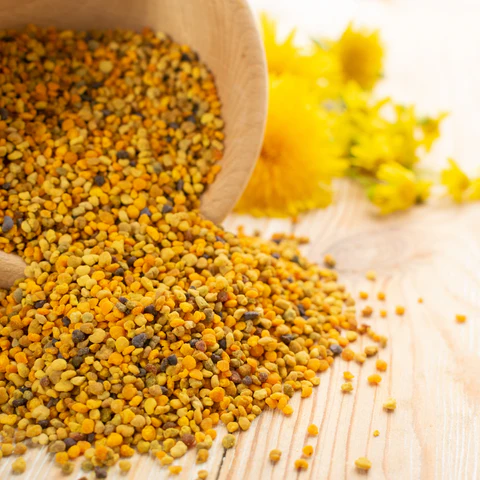
Propolis is not a plant but a resinous substance made by honeybees, who gather sap and botanical resins and mix them with beeswax and enzymes to seal and protect their hive. Used since ancient Egyptian, Greek, and Roman times, it is valued chiefly as a natural antimicrobial and immune support. Rich in flavonoids and aromatic compounds, propolis has notable antibacterial, antiviral, and antifungal properties, traditionally used to fight infections, support the immune system, and help the body resist colds and flu. It is especially renowned for soothing sore throats and mouth and gum problems, and is widely used in throat sprays, lozenges, and oral care for canker sores, gum inflammation, and oral infections. Applied to the skin, propolis supports the healing of wounds, burns, and minor infections. Protective and healing, propolis is treasured as a remedy for immunity, sore throats, oral health, and skin healing.
Medicinal Uses
Propolis is a remarkable substance produced not by a plant but by honeybees, who collect resins and saps from tree buds and bark and combine them with beeswax and their own enzymes to create a sticky material used to seal, sterilize, and protect their hive. This same protective quality has made propolis a valued medicine since the time of ancient Egypt, Greece, and Rome.
The foremost medicinal use of propolis is as a natural antimicrobial and immune support. It has well-documented antibacterial, antiviral, and antifungal properties, and is traditionally used to help the body fight infections, strengthen immune defenses, and resist colds, flu, and seasonal illness.
Propolis is especially renowned for the mouth and throat. It is a classic remedy for sore, inflamed throats and is widely used in throat sprays and lozenges. For oral health, it is used for canker sores, mouth ulcers, gum inflammation, and minor oral infections, reflecting both its antimicrobial and soothing, healing actions.
Applied to the skin, propolis supports the healing of wounds, cuts, burns, and minor skin infections, and is used in salves and ointments for its protective, tissue-repairing, and antimicrobial effects.
Propolis is exceptionally rich in flavonoids, phenolic acids, and aromatic compounds, which underlie its antimicrobial, anti-inflammatory, antioxidant, and healing properties. Its exact composition varies with the plants the bees visit. People with bee or hive-product allergies should use it cautiously. Protective and healing, propolis is treasured as a remedy for immunity, sore throats, oral health, and skin healing.
Benefits
Provides natural antimicrobial action, supports the immune system, helps resist colds and flu, soothes sore and inflamed throats, helps with canker sores and mouth ulcers, eases gum inflammation and oral infections, supports the healing of wounds, cuts, and burns, provides antioxidant and anti-inflammatory effects
How to Use & Dosage
Apply propolis ointment or diluted tincture to wounds, cold sores, and minor skin infections.
500-1000 mg of propolis per day, divided into doses.
1-2 ml (about 20-40 drops) in water, taken 1-3 times daily; can be gargled for sore throat.
Use propolis throat spray or lozenges as directed for sore throat and mouth.
More Info
Frequently asked questions
What is Propolis used for?
Propolis is a remarkable substance produced not by a plant but by honeybees, who collect resins and saps from tree buds and bark and combine them with beeswax and their own enzymes to create a sticky material used to seal, sterilize, and protect their hive. This same protective quality has made propolis a valued medicine since the time of ancient Egypt, Greece, and Rome. The foremost medicinal use of propolis is as a natural antimicrobial and immune support.
What are the benefits of Propolis?
Provides natural antimicrobial action, supports the immune system, helps resist colds and flu, soothes sore and inflamed throats, helps with canker sores and mouth ulcers, eases gum inflammation and oral infections, supports the healing of wounds, cuts, and burns, provides antioxidant and anti-inflammatory effects
How do you take Propolis?
Common preparations include topical, capsules, tincture, throat spray or lozenges. See the dosage guidance above, and consult a qualified practitioner for amounts suited to you.
This information is for general wellness and educational purposes only and is not medical advice. Consult a qualified healthcare provider before using any herb — especially if you are pregnant, nursing, or taking medication.
Learn more — more Pain Management herbs