Pau d'Arco
Handroanthus impetiginosus (Tabebuia impetiginosa) · Bignoniaceae
Reviewed by The Sarv Health Team · Updated July 6, 2026 · Our editorial process
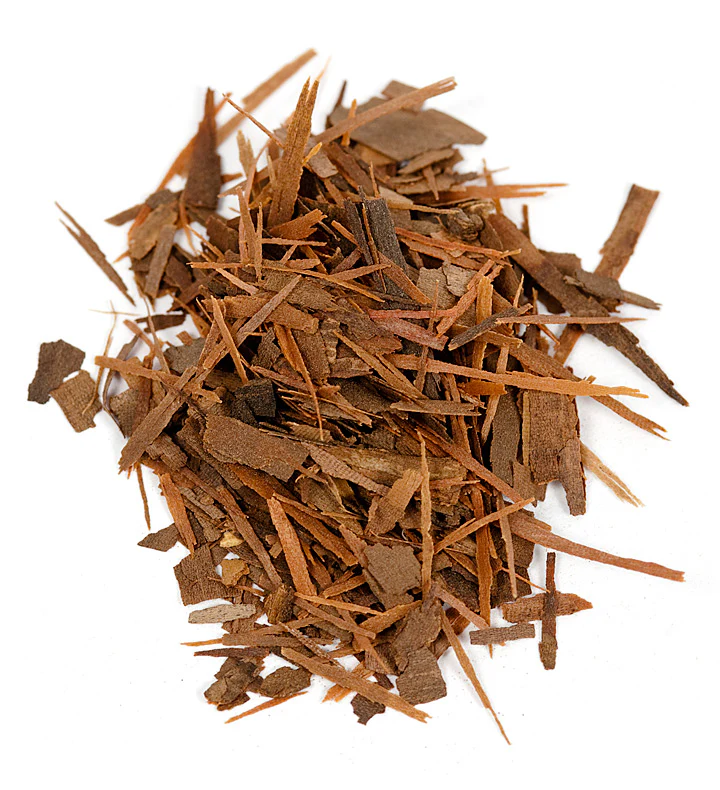
Pau d'arco is the inner bark of a large flowering tree of the South American rainforest, long used by Indigenous peoples of the Amazon and the Andes and popularized as the tea known as lapacho or taheebo. It is valued above all as a powerful antimicrobial and immune-supporting herb, traditionally used to fight a wide range of infections. It is especially well known as a remedy for fungal and yeast infections, including candida overgrowth, and is used for bacterial and viral infections as well. Its signature naphthoquinone compounds, lapachol and beta-lapachone, are the focus of scientific interest for antimicrobial, anti-inflammatory, and anticancer activity, and pau d'arco has a strong traditional reputation as a supportive botanical in cancer care. It is also used to reduce inflammation, support the blood and digestion, and bolster overall immune resilience. Bitter and cleansing, pau d'arco is treasured as a remedy for infections, candida, inflammation, and immune support.
Medicinal Uses
Pau d'arco is prepared from the inner bark of several related species of large canopy trees native to the rainforests of Central and South America, famed for their vivid trumpet-shaped flowers. Indigenous peoples have used the bark for centuries, and its tea, known as lapacho or taheebo, became widely known internationally. It is classified as bitter, cooling, and cleansing, and its most studied constituents are the naphthoquinones lapachol and beta-lapachone, along with other quinones, flavonoids, and minerals.
The foremost medicinal use of pau d'arco is as a broad antimicrobial and immune-supporting herb. It is traditionally used to help the body combat a wide range of infections, and it has a particularly strong reputation as an antifungal remedy, widely used against yeast and fungal infections such as candida overgrowth, thrush, athlete's foot, and other fungal conditions, taken internally and applied externally. It is also used for bacterial and viral infections and to strengthen overall immune resistance.
Pau d'arco has long held a place as a supportive botanical in traditional cancer care. Its naphthoquinones, especially beta-lapachone, are an active area of laboratory research for their effects on cancer cells, and the bark has a strong folk reputation as a supportive tonic, though it should be understood as traditional and complementary rather than a proven treatment.
The herb is further used to reduce inflammation and ease inflammatory and painful conditions, to support and cleanse the blood, to aid digestion and soothe the digestive tract, and to support skin health, both internally and applied to wounds, rashes, and fungal skin conditions.
Because it is potent, pau d'arco is typically used in moderate amounts and for defined periods, and it is avoided in pregnancy and with blood-thinning medication. Bitter, cooling, and cleansing, pau d'arco is treasured as a remedy for infections, candida, inflammation, and immune support.
Benefits
Provides broad antimicrobial action, fights fungal and yeast infections including candida, supports the body against bacterial and viral infections, strengthens immune resistance, reduces inflammation, contains naphthoquinones studied for anticancer activity, supports and cleanses the blood, aids digestion, supports skin health, promotes overall vitality
How to Use & Dosage
Use in moderate amounts for defined periods; avoid in pregnancy and if taking blood-thinning medication, and consult a practitioner for ongoing use.
500-1000 mg per day, divided into doses.
1-2 ml (about 20-40 drops), taken 2-3 times daily.
Simmer 1-2 teaspoons of pau d'arco bark in water for 15-20 minutes. Drink 1-3 cups daily.
More Info
Frequently asked questions
What is Pau d'Arco used for?
Pau d'arco is prepared from the inner bark of several related species of large canopy trees native to the rainforests of Central and South America, famed for their vivid trumpet-shaped flowers. Indigenous peoples have used the bark for centuries, and its tea, known as lapacho or taheebo, became widely known internationally. It is classified as bitter, cooling, and cleansing, and its most studied constituents are the naphthoquinones lapachol and beta-lapachone, along with other quinones, flavonoids, and minerals.
What are the benefits of Pau d'Arco?
Provides broad antimicrobial action, fights fungal and yeast infections including candida, supports the body against bacterial and viral infections, strengthens immune resistance, reduces inflammation, contains naphthoquinones studied for anticancer activity, supports and cleanses the blood, aids digestion, supports skin health, promotes overall vitality
How do you take Pau d'Arco?
Common preparations include note, capsules, tincture, decoction. See the dosage guidance above, and consult a qualified practitioner for amounts suited to you.
This information is for general wellness and educational purposes only and is not medical advice. Consult a qualified healthcare provider before using any herb — especially if you are pregnant, nursing, or taking medication.
Learn more — more Pain Management herbs