Graviola
Annona muricata · Annonaceae
Reviewed by The Sarv Health Team · Updated July 6, 2026 · Our editorial process
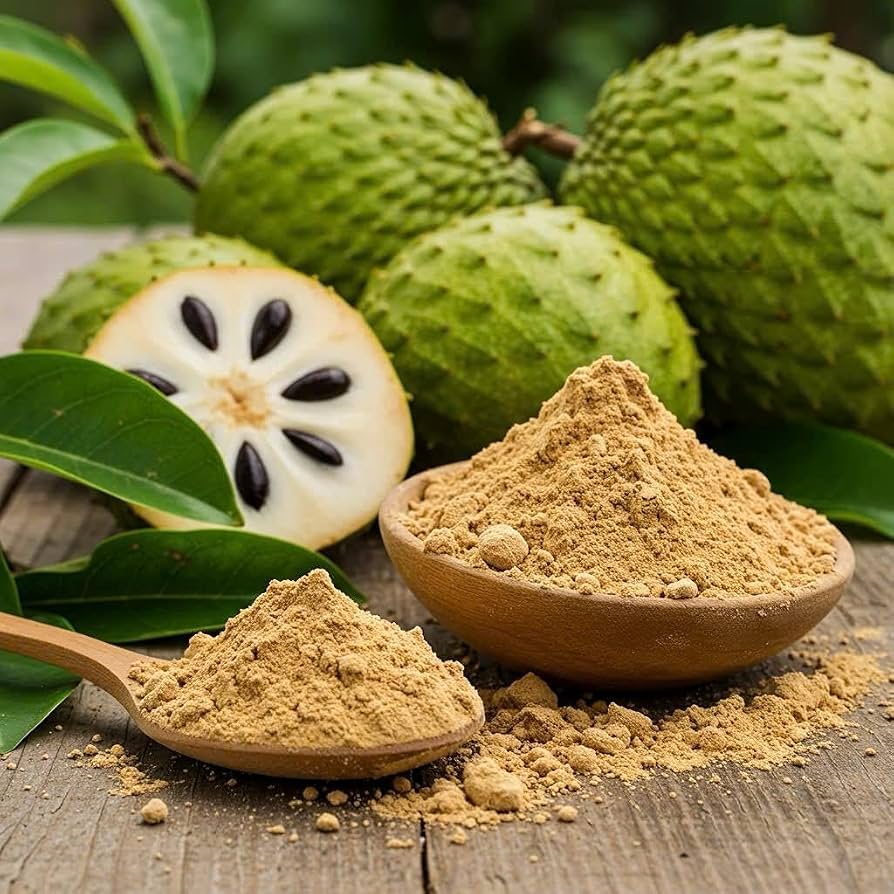
Graviola, also known as soursop, is a small tropical tree of the Americas whose fruit and leaves have a long history of use in traditional medicine across South America, the Caribbean, and Africa. The leaves are the most medicinally used part, traditionally taken as a tea to calm the nerves and promote restful sleep, ease inflammation, support digestion, and lower fevers. Graviola has drawn considerable attention for its content of unique compounds called acetogenins, which laboratory research has shown to have activity against various cancer cell lines, making it a popular subject of interest as a complementary botanical, though robust human evidence is still lacking. It is also used traditionally as an antimicrobial and antiparasitic and to support healthy blood pressure. Because heavy, prolonged use of the seeds and leaves has been linked to nerve concerns, graviola is best used in moderation and with guidance. Cooling and calming, graviola is valued in tradition as a remedy for the nerves, inflammation, and overall wellbeing.
Medicinal Uses
Graviola is a small evergreen tree native to the tropical Americas, cultivated for its large, green, spiny fruit known as soursop, which has a sweet-tart custard-like flesh. Alongside the fruit, the leaves, bark, and seeds have been used for generations in the traditional medicine of the Amazon, the Caribbean, West Africa, and Southeast Asia. Its most studied constituents are a group of compounds called annonaceous acetogenins, along with alkaloids and antioxidant flavonoids.
Traditionally, the most common medicinal use of graviola is as a calming nervine. A tea made from the leaves is widely used to soothe the nerves, ease stress and anxiety, and promote relaxation and restful sleep, earning it a folk reputation as a gentle sedative.
Graviola has attracted significant scientific interest for its acetogenins, which in laboratory and cell studies have shown activity against a range of cancer cell lines. This has made it a popular botanical among those seeking complementary support, though it is important to note that this evidence comes largely from laboratory research and strong human clinical trials are still lacking, so it should be regarded as traditional and investigational rather than a proven treatment.
The leaves and fruit are also used traditionally for their antimicrobial, antiparasitic, and anti-inflammatory properties, applied to infections, digestive complaints, and inflammatory conditions, and to help lower fevers. Graviola is additionally used in folk medicine to support healthy blood pressure and digestion.
An important caution accompanies graviola: heavy and prolonged consumption, particularly of the seeds and large amounts of leaf, has been associated in some research with neurological concerns, so it is best used in moderation, for limited periods, and with professional guidance, and avoided in pregnancy and with Parkinson's-related medication. Cooling and calming, graviola is valued in tradition as a remedy for the nerves, inflammation, and overall wellbeing.
Benefits
Calms the nerves and eases stress, promotes relaxation and restful sleep, reduces inflammation, supports digestion, helps lower fevers, provides antimicrobial and antiparasitic action, contains acetogenins studied for anticancer activity, supports healthy blood pressure, provides antioxidant protection
How to Use & Dosage
Use in moderation and for short periods only; avoid the seeds, avoid in pregnancy, and consult a practitioner, especially if you have Parkinson's or take related medication.
500-1000 mg per day, divided into doses.
Steep 1 teaspoon of dried graviola leaf in hot water for 10-15 minutes. Drink up to 1 cup daily for limited periods.
1-2 ml (about 20-40 drops), taken 1-2 times daily.
More Info
Frequently asked questions
What is Graviola used for?
Graviola is a small evergreen tree native to the tropical Americas, cultivated for its large, green, spiny fruit known as soursop, which has a sweet-tart custard-like flesh. Alongside the fruit, the leaves, bark, and seeds have been used for generations in the traditional medicine of the Amazon, the Caribbean, West Africa, and Southeast Asia. Its most studied constituents are a group of compounds called annonaceous acetogenins, along with alkaloids and antioxidant flavonoids.
What are the benefits of Graviola?
Calms the nerves and eases stress, promotes relaxation and restful sleep, reduces inflammation, supports digestion, helps lower fevers, provides antimicrobial and antiparasitic action, contains acetogenins studied for anticancer activity, supports healthy blood pressure, provides antioxidant protection
How do you take Graviola?
Common preparations include note, capsules, infusion, tincture. See the dosage guidance above, and consult a qualified practitioner for amounts suited to you.
This information is for general wellness and educational purposes only and is not medical advice. Consult a qualified healthcare provider before using any herb — especially if you are pregnant, nursing, or taking medication.
Learn more — more Pain Management herbs