Eyebright
Euphrasia officinalis · Orobanchaceae (formerly Scrophulariaceae)
Reviewed by The Sarv Health Team · Updated July 6, 2026 · Our editorial process
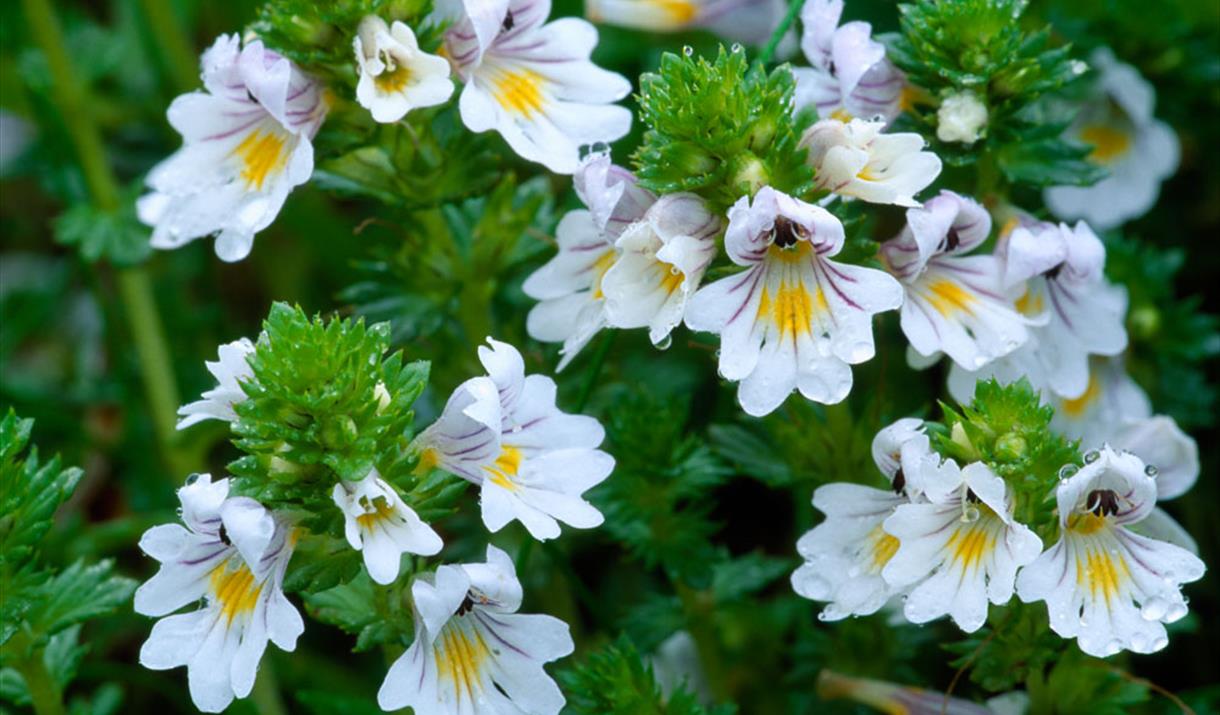
Eyebright is a small, semi-parasitic meadow plant whose name reflects its centuries-old reputation as the premier herb for the eyes. Astringent, anti-inflammatory, and drying, it has been used since medieval times to soothe irritated, inflamed, and watery eyes, and remains a classic remedy for conjunctivitis, blepharitis, eye strain, and styes, taken internally and applied as a cooled compress or eyewash. Its astringent tannins tighten and tone mucous membranes, making it equally valued for the upper respiratory tract, where it dries excess secretions and relieves the runny nose, sneezing, and watery eyes of hay fever, allergies, colds, and sinus congestion. The iridoid glycoside aucubin, along with tannins and flavonoids, underlies its anti-inflammatory and anti-catarrhal action. Cooling and toning, eyebright is treasured above all as a remedy for the eyes and for allergic and catarrhal complaints of the head.
Medicinal Uses
Eyebright is a delicate annual of grasslands and meadows that draws part of its nourishment from the roots of surrounding grasses. For centuries it has been the herb most closely associated with the health of the eyes, its very name a tribute to its traditional use. Its actions are astringent, anti-inflammatory, and anti-catarrhal, owing to constituents such as the iridoid glycoside aucubin, tannins, and flavonoids.
The foremost medicinal use of eyebright is for inflamed and irritated eyes. It has long been used, both internally and as a cooled, well-strained compress or eyewash, to soothe conjunctivitis, blepharitis, styes, eye strain, and eyes that are red, itchy, watery, or sensitive to light. Its astringent action helps tighten and tone the delicate membranes of the eye while calming inflammation and reducing excess tearing.
Eyebright is equally valued for the upper respiratory tract and the mucous membranes of the head. Its drying, anti-catarrhal quality makes it a leading remedy for the runny nose, sneezing, watery eyes, and congestion of hay fever, seasonal allergies, colds, and sinusitis. It helps reduce the flow of thin, watery mucus and eases the stuffiness and pressure of catarrhal conditions.
By toning and firming irritated tissues, eyebright is also used for general inflammation of the mucous membranes and is sometimes included in formulas for coughs and nasal catarrh.
When used as an eyewash, it must be prepared carefully with sterile technique and thorough straining to avoid introducing irritation. Cooling, drying, and toning, eyebright remains a treasured remedy for the eyes and for allergic and catarrhal complaints of the head and sinuses.
Benefits
Soothes irritated and inflamed eyes, relieves conjunctivitis and blepharitis, eases eye strain and watery eyes, reduces redness and itching, relieves hay fever and seasonal allergies, dries excess nasal and eye secretions, eases sinus congestion and catarrh, tones the mucous membranes, supports the upper respiratory tract
How to Use & Dosage
Prepare a well-strained, sterile, cooled infusion and use only with careful hygiene. Consult a practitioner before applying to the eyes.
400-600 mg per day, divided into doses.
Steep 1-2 teaspoons of dried eyebright in hot water for 10-15 minutes. Drink up to 3 cups daily.
1-4 ml (about 20-80 drops), taken 2-3 times daily.
More Info
Frequently asked questions
What is Eyebright used for?
Eyebright is a delicate annual of grasslands and meadows that draws part of its nourishment from the roots of surrounding grasses. For centuries it has been the herb most closely associated with the health of the eyes, its very name a tribute to its traditional use. Its actions are astringent, anti-inflammatory, and anti-catarrhal, owing to constituents such as the iridoid glycoside aucubin, tannins, and flavonoids.
What are the benefits of Eyebright?
Soothes irritated and inflamed eyes, relieves conjunctivitis and blepharitis, eases eye strain and watery eyes, reduces redness and itching, relieves hay fever and seasonal allergies, dries excess nasal and eye secretions, eases sinus congestion and catarrh, tones the mucous membranes, supports the upper respiratory tract
How do you take Eyebright?
Common preparations include eyewash, capsules, infusion, tincture. See the dosage guidance above, and consult a qualified practitioner for amounts suited to you.
This information is for general wellness and educational purposes only and is not medical advice. Consult a qualified healthcare provider before using any herb — especially if you are pregnant, nursing, or taking medication.
Learn more — more Pain Management herbs