Evening primrose
Oenothera biennis · Onagraceae
Reviewed by The Sarv Health Team · Updated July 6, 2026 · Our editorial process
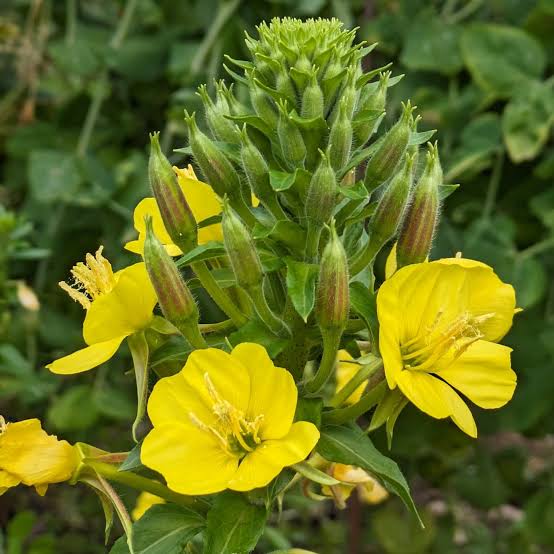
Evening primrose is a night-blooming wildflower whose seeds yield an oil that is one of the richest plant sources of gamma-linolenic acid (GLA), an omega-6 fatty acid the body uses to make anti-inflammatory and hormone-balancing compounds. This makes evening primrose oil a valued remedy for women's health and the skin. It is widely used to ease the symptoms of premenstrual syndrome (PMS), including breast tenderness, mood swings, and bloating, and to support hormonal balance around the menstrual cycle and menopause. Its GLA is equally prized for skin health, helping to calm the inflammation, dryness, and itching of eczema and other inflammatory skin conditions and to support supple, healthy skin. Evening primrose is also used to ease inflammatory joint discomfort and to support nerve and overall inflammatory balance. Nourishing and balancing, evening primrose is treasured as a remedy for hormonal health, the skin, and inflammation.
Medicinal Uses
Evening primrose is a biennial wildflower native to North America, named for its pale yellow blossoms that open in the evening. Native peoples used the whole plant traditionally, but its greatest modern importance lies in the oil pressed from its tiny seeds, which is one of the best plant sources of gamma-linolenic acid (GLA), an omega-6 essential fatty acid. In the body, GLA is converted into prostaglandins and other messengers that help regulate inflammation and hormonal balance.
The most valued medicinal use of evening primrose oil is for women's hormonal health. It is widely used to relieve the symptoms of premenstrual syndrome (PMS), particularly cyclical breast tenderness and pain, mood swings, irritability, and bloating, and to support hormonal balance across the menstrual cycle and through the transition of menopause, where it is used to help ease hot flashes and related discomfort.
Evening primrose oil is equally prized for the skin. Its GLA helps strengthen the skin barrier and calm inflammation, making it a well-known remedy for eczema (atopic dermatitis), dry, itchy, or irritated skin, and other inflammatory skin conditions, used both internally and, in some cases, topically. It supports soft, supple, well-hydrated skin.
Because of its influence on inflammatory pathways, evening primrose is also used to help ease inflammatory joint discomfort, such as that of rheumatoid arthritis, and to support healthy nerve function and general inflammatory balance.
Gentle, nourishing, and balancing, evening primrose is best used consistently over time and is treasured as a remedy for hormonal health, the skin, and inflammation.
Benefits
Eases PMS symptoms, relieves cyclical breast tenderness, supports hormonal balance, helps with menopause symptoms, calms eczema and inflammatory skin conditions, relieves dry and itchy skin, supports a healthy skin barrier, eases inflammatory joint discomfort, supports nerve health, promotes overall inflammatory balance
How to Use & Dosage
Best taken consistently for several weeks to months to feel the full effect.
Apply the oil directly to dry or irritated skin as needed.
1-2 teaspoons of the oil daily, taken with food.
500-1300 mg of evening primrose oil, taken 1-3 times daily with food (providing roughly 40-320 mg GLA).
More Info
Frequently asked questions
What is Evening primrose used for?
Evening primrose is a biennial wildflower native to North America, named for its pale yellow blossoms that open in the evening. Native peoples used the whole plant traditionally, but its greatest modern importance lies in the oil pressed from its tiny seeds, which is one of the best plant sources of gamma-linolenic acid (GLA), an omega-6 essential fatty acid. In the body, GLA is converted into prostaglandins and other messengers that help regulate inflammation and hormonal balance.
What are the benefits of Evening primrose?
Eases PMS symptoms, relieves cyclical breast tenderness, supports hormonal balance, helps with menopause symptoms, calms eczema and inflammatory skin conditions, relieves dry and itchy skin, supports a healthy skin barrier, eases inflammatory joint discomfort, supports nerve health, promotes overall inflammatory balance
How do you take Evening primrose?
Common preparations include note, topical, liquid oil, oil (softgels). See the dosage guidance above, and consult a qualified practitioner for amounts suited to you.
This information is for general wellness and educational purposes only and is not medical advice. Consult a qualified healthcare provider before using any herb — especially if you are pregnant, nursing, or taking medication.
Learn more — more Pain Management herbs