Medically reviewed by the Sarv Health Team · Our editorial process
Psilocybin for Depression: What the Research Actually Shows
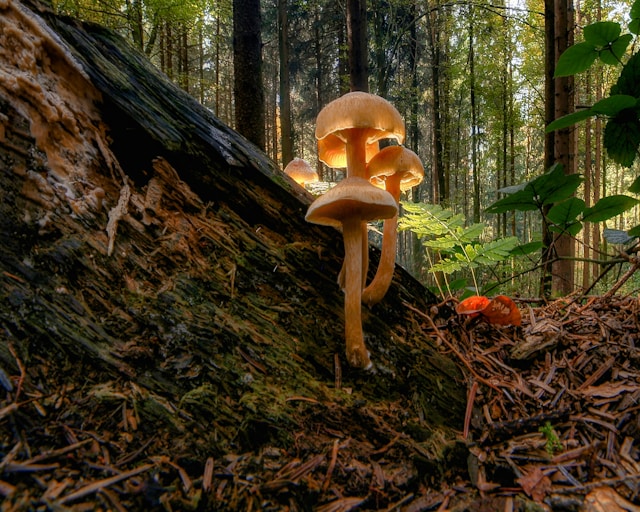
Psilocybin, the compound in "magic mushrooms," has produced some of the largest short-term antidepressant effects ever measured in a clinical trial, and the FDA is now reviewing it for treatment-resistant depression. It isn't an approved medicine, it's illegal in most of the United States, and it's genuinely dangerous alongside certain psychiatric drugs.
If you've read a headline about psychedelics curing depression, you've read the most exciting version of this story. Here's the fuller one.
What is psilocybin, and why is it being studied for depression?
Psilocybin occurs naturally in more than 200 species of mushroom, most of them in the genus Psilocybe. Your body converts it into psilocin, which binds to serotonin 5-HT2A receptors in the brain. That receptor activity produces the shift in perception people associate with mushrooms, and researchers think it also opens a temporary window in which the brain is unusually flexible.
The interest in depression comes from a pattern nobody expected. Conventional antidepressants are taken daily and usually need four to six weeks to do anything. In psilocybin trials, people get one or two supervised doses, improvement often shows up the next day, and in some of them it holds for months.
That combination is why serious researchers took it seriously instead of filing it under curiosity. It's worth being precise about what's actually being tested, though. Not mushrooms taken at home. A standardized synthetic dose, given in a clinic, with trained people in the room for six to eight hours, plus structured sessions before and after. The drug and the therapy are being studied as one package, and you can't separate them out from the results.
What does the research on psilocybin for depression actually show?
Three trials matter most, and reading them together tells a better story than any one of them alone. All three measured depression on the MADRS, a clinician-rated scale that runs from 0 to 60. Higher score, heavier depression.
Phase 2, published in JAMA in 2023. 104 adults with major depressive disorder received either a single 25 mg dose of synthetic psilocybin or 100 mg of niacin as a placebo, both with psychological support. Depression scores finished 12.3 points lower than placebo at day 43 (95% confidence interval −17.5 to −7.2; p<0.001). Participants were also measurably less impaired in daily functioning.
Phase 2b, published in the New England Journal of Medicine in 2022. 233 adults with treatment-resistant depression got a single dose at one of three strengths: 25 mg, 10 mg, or 1 mg. The 25 mg dose beat the 1 mg comparator at three weeks. The 10 mg dose didn't.
Phase 3, the COMP006 trial reported in 2026. Two 25 mg doses three weeks apart, against 1 mg, in one arm of a programme running over 1,000 participants. Scores finished 3.8 points lower at week 6 (p<0.001). Improvement appeared the day after dosing and held through week 26 in the people who responded.
A 12-point separation is big, comparable to or better than what antidepressant trials usually manage. That's the number the enthusiastic headlines were built on. Now look at the third trial, where the gap narrowed to 3.8 points.
This isn't a scandal, and it isn't evidence the drug doesn't work. The Phase 3 result was still highly significant, and the two trials differ in ways that would compress any difference. The JAMA trial enrolled people with major depression and compared psilocybin against niacin, a vitamin that causes flushing and nothing else. Phase 3 enrolled people whose depression had already resisted other treatments, a much harder group to move, and compared 25 mg against 1 mg of psilocybin, which produces mild real effects of its own. Tougher population, tougher comparator, smaller gap.
But big effect in a small trial and a smaller one in a large trial is among the most reliable regularities in all of medicine. If you take one thing from this article, take that. Psilocybin looks like a real antidepressant with a real effect size, not a miracle.
Is psilocybin about to be FDA approved?
Closer than most people realize. Still not there. On April 24, 2026, the FDA granted Compass Pathways a rolling review for its synthetic psilocybin formulation, COMP360, in treatment-resistant depression, and awarded it a Commissioner's National Priority Voucher. That voucher shortens the review to one or two months once the application is complete. Both Phase 3 trials hit their primary endpoints.
In plain terms: the agency agreed to read the file in pieces as they arrive rather than waiting for the whole thing, and to read it fast. What that doesn't mean is that psilocybin is approved, or that it will be, or that anyone can be prescribed it today. No decision has been announced. Regulators can still say no, or approve it with a much narrower label than the company wants.
If approval does come, expect it to look like esketamine, ketamine's chemical cousin: administered in a certified clinic, for a specific hard-to-treat diagnosis, with monitoring requirements attached. Not something you pick up at the pharmacy.
What dose is used, and how is it given?
This section describes what happens inside trials and licensed programs. It isn't a protocol to follow at home, and nothing here is a recommendation to obtain or use psilocybin.
Trials settled on 25 mg of synthetic psilocybin, given once or twice a few weeks apart. Lower doses haven't performed as well. In the Phase 2b trial, 10 mg failed to separate from the 1 mg comparator at all, which suggests the antidepressant effect needs a full psychedelic dose rather than a subtle one. That's also why microdosing is a separate question with far weaker evidence behind it.
The session is long. Onset takes roughly 20 to 40 minutes, the peak lasts two to three hours, and the whole thing runs six to eight hours with a trained person present the entire time. Two other pieces sit around it, and practitioners treat both as non-negotiable:
- Preparation. Meeting the facilitator beforehand, learning what the experience will feel like, setting an intention. Practitioners talk about "set and setting," meaning the person's state of mind and the physical space, as things that genuinely change how a session goes rather than as atmosphere.
- Integration. Structured sessions afterwards to make sense of whatever surfaced. Clinicians in this field broadly agree that a dosing day without integration work is the version most likely to leave someone worse off, which is why experienced facilitators book the follow-ups before the session rather than after.
None of that translates to a mushroom eaten alone at home. That's a different and considerably riskier proposition than what the trials tested.
Safety, side effects and interactions
Natural doesn't mean risk-free, and psilocybin makes the point clearly. In the Phase 3 programme, treatment-emergent adverse events were reported as mild or moderate with most resolving inside 24 hours. Worth remembering where that happened, though: in screened participants, under medical supervision, which is exactly the safety net that real-world use lacks.
Drug interactions that matter:
- Lithium. Avoid entirely. This is the serious one. Combining classic psychedelics with lithium has been linked to seizures and delirium. If you take lithium, psilocybin is off the table, full stop.
- MAOIs. Contraindicated. MAO-A inhibition slows the breakdown of psilocin and can amplify its effects dangerously, with risk of high blood pressure and overheating. Supervised use requires a long washout first.
- SSRIs and SNRIs. Not considered dangerous, but blunting. These drugs desensitize the same 5-HT2A receptors psilocybin acts on, so the experience is often muted. Serotonin syndrome here is a theoretical concern rather than a demonstrated one. And never stop an antidepressant on your own to make a psychedelic work better; discontinuation carries real risks of its own.
- Antipsychotics occupy 5-HT2A receptors and can reverse psilocybin's effects, which is why they're used to bring a difficult experience to an end rather than taken alongside one.
- Tricyclics and stimulants. Both add to psilocybin's cardiovascular effects, and autonomic instability is the worry.
- One herbal note, since it's a common supplement: St. John's wort (Hypericum perforatum) is serotonergic, and anyone considering supervised psilocybin should raise it with their clinician first.
Who should not use psilocybin:
- Anyone with bipolar disorder, or a personal or family history of psychosis or schizophrenia. These are standard exclusion criteria in every major trial, because of the risk of triggering mania or psychotic symptoms.
- People with significant cardiovascular disease or uncontrolled high blood pressure, since psilocybin transiently raises heart rate and blood pressure.
- Anyone pregnant or breastfeeding. There's no safety data.
- Anyone taking the medications listed above.
Then there's the risk everyone has already heard about: a frightening, disorienting experience. Under supervision it's usually manageable. Alone, it's how people end up injured or in an emergency room. Red flags that need immediate help: chest pain, a seizure, thoughts of self-harm, or psychotic symptoms that don't fade as the drug wears off. Call emergency services.
Where is psilocybin therapy legal?
Psilocybin is still a Schedule I controlled substance under US federal law, the same category as heroin, formally defined as having no accepted medical use. Two states have built regulated access anyway.
Oregon passed Measure 109 in 2020 and began serving clients through licensed facilitators in June 2023. Colorado passed Proposition 122 in 2022 and issued its first healing center license on March 31, 2025. Several other states have set up pilot programmes or study groups, and dozens have at least considered bills.
Outside those regulated programmes, possession remains a federal crime whatever your state says, and "decriminalized" is not the same thing as legal. Retreats in other countries run under their own rules, and how carefully they screen people varies enormously.
What the studies still can't tell us
Two honest limitations you won't see in most coverage. The first is blinding. In a good drug trial neither the participant nor the researcher knows who got the real thing. With a substance that produces unmistakable perceptual effects, nearly everyone knows. Researchers call this functional unblinding, and it means expectancy, the hope and belief that come with knowing you've been given something powerful, is baked into the results in a way nobody can fully subtract. It's the central methodological criticism of this entire field, and regulators are actively wrestling with what to do about it.
The second is duration. "Durable to six months in responders" is genuinely impressive, and it's also the outer edge of what anyone has measured well. Whether people need repeat dosing every year, every few years, or never again is simply unknown.
A whole-person note
Depression rarely responds to a single lever. Sleep, movement, daylight, connection, thyroid and iron status, alcohol, grief: all of them shape how heavy it feels, and none of them get replaced by a molecule, psychedelic or herbal or pharmaceutical. If you're struggling right now, the most useful next step is almost never a substance you'd have to break the law to obtain. It's a conversation with someone who can look at the whole picture, including options that have decades of safety data behind them.
Gentler plant allies do have a real place in that picture for everyday stress, low mood, and poor sleep. They're also far better studied for those purposes than psilocybin is.
Sources
- Single-Dose Psilocybin Treatment for Major Depressive Disorder: A Randomized Clinical Trial (JAMA, 2023)
- Single-Dose Psilocybin for a Treatment-Resistant Episode of Major Depression (NEJM, 2022)
- Compass Pathways: FDA grants NDA rolling review and Commissioner's National Priority Voucher (April 2026)
- COMP360 Psilocybin Achieves Primary Endpoint in Phase 3 Trial (Psychiatric Times)
- Psilocybin: A Clinician's Guide to Pharmacological Interactions (Psychiatric Times)
- State Policies Supporting Evidence-Based Therapeutic Psilocybin Use (ASTHO)
- Colorado Natural Medicine Division: first healing center license issued (March 2025)
Frequently asked questions
Does psilocybin cure depression?
No. Trials show it can reduce symptoms substantially, sometimes within a day and lasting months in people who respond. That's a treatment effect, not a cure, and it was measured under clinical supervision. Psilocybin isn't an approved treatment for depression anywhere in the US today.
Can I take psilocybin with my antidepressant?
SSRIs and SNRIs aren't considered dangerous with psilocybin, but they blunt its effects by desensitizing the same receptors. Lithium is different and must be avoided, because the combination has been linked to seizures. MAOIs are also contraindicated. Never adjust psychiatric medication yourself.
How is psilocybin therapy different from taking mushrooms?
Trials use a precise synthetic dose, medical screening, a six to eight hour supervised session, and structured preparation and integration around it. Recreational use has none of that. Screening is what keeps people with bipolar disorder, psychosis risk, or interacting medications out of harm's way.
This article is for general wellness and educational purposes only and is not medical advice. Consult a qualified healthcare provider before using herbs — especially if you are pregnant, nursing, or taking medication.