Medically reviewed by the Sarv Health Team · Our editorial process
The History of Herbal Medicine: From Ancient Healers to Modern Science
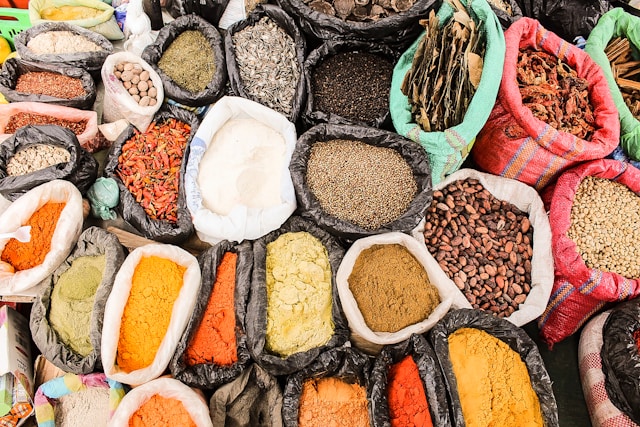
Herbal medicine is the oldest form of healing we have. Humans have used plants as medicine for tens of thousands of years, and written records of herbal remedies go back more than 4,000 years across Mesopotamia, China, India, and Egypt. Long before laboratories, nearly every medicine on earth began as a leaf, root, bark, or flower — and a surprising number of today's pharmaceuticals still do.
Medicine began with plants
For most of human history, plants were the pharmacy. Exactly how far back that goes is debated: a Neanderthal grave at Shanidar in present-day Iraq was once thought to show deliberate burial with medicinal flowers around 60,000 years ago, though many researchers now suspect the pollen was carried in by burrowing animals rather than mourners. What is firmly documented is that by around 2000 BC, the Sumerians of Mesopotamia were pressing recipes into clay tablets that referenced hundreds of healing plants — among the earliest written prescriptions we've ever found.
Four ancient traditions that still shape us
Across the ancient world, separate cultures arrived at plant medicine independently — and much of their knowledge survives in your kitchen and medicine cabinet today.
- China. Legend credits the mythical "divine farmer" Shennong with personally tasting hundreds of herbs to learn their effects. The classic text that bears his name, the Shennong Bencaojing, was actually compiled much later, around the Han dynasty, and catalogued 365 herbs. Many are still in daily use, including ginseng, cinnamon bark, and ma huang — the plant that gave modern medicine the compound ephedrine.
- India. The Ayurvedic tradition, recorded by physicians such as Charaka and Sushruta, treated food and medicine as one continuum. Sushruta organized plants by the conditions they treated — an early version of the symptom-first thinking we still use. Turmeric, pepper, clove, and nutmeg all carry Ayurvedic roots.
- Egypt. The Ebers Papyrus, written around 1550 BC, records roughly 700 remedies and hundreds of prescriptions — one of the largest healing texts of the ancient world. Its plants included garlic, juniper, senna, and willow, whose bark is the ancestor of aspirin.
The healers who turned folklore into science
A handful of figures pushed plant medicine from tradition toward system. The Greek scholar Theophrastus (c. 371–287 BC), often called the father of botany, classified more than 500 plants and was among the first to stress gradual dosing — vital knowledge when the margin between remedy and poison was thin. Centuries later, the physician Dioscorides wrote De Materia Medica, a plant encyclopedia so thorough it remained the standard reference for roughly 1,500 years. The Roman doctor Galen built the influential "four humors" framework and grouped herbs by their actions, giving healers a way to cross-reference remedies. In medieval Europe, Hildegard von Bingen blended careful plant observation with a holistic, nature-centered philosophy strikingly similar to traditions half a world away.
By the fifteenth to eighteenth centuries, printing spread this knowledge widely, and herbalists like Culpeper, Gerard, and Linnaeus began compounding plants into stronger, more complex blends. There was a catch that may sound familiar: the fashionable new compounded medicines were expensive, and the best care drifted toward those who could afford it.
The newest chapter
Modern science hasn't discarded this inheritance — it's validated much of it, isolating active compounds and testing traditional uses. What's changing now is access. For most of history, knowing which plant to use, in what amount, for which person, took a trained healer. Today that guidance can be personalized and put in anyone's pocket. That's the thread Sarv picks up: matching time-tested herbal knowledge to your individual needs, so a 60,000-year-old practice becomes genuinely usable in modern life.
Sources
- Encyclopædia Britannica — "Ebers papyrus": https://www.britannica.com/topic/Ebers-papyrus
- Wikipedia — "Shennong Bencaojing" (dating and attribution): https://en.wikipedia.org/wiki/Shennong_Bencaojing
- Sommer, J.D., "The Shanidar IV 'flower burial': a reevaluation," Cambridge Archaeological Journal / ScienceDirect: https://www.sciencedirect.com/science/article/abs/pii/037887419290023K
Frequently asked questions
How old is herbal medicine?
Plant-based healing is many thousands of years old. Written records reach back over 4,000 years, and physical evidence of medicinal plant use is far older still, though the very oldest claims are debated.
What is the oldest written record of herbal remedies?
Some of the earliest are Sumerian clay tablets from Mesopotamia (around 2000 BC) listing plant-based prescriptions. The Egyptian Ebers Papyrus (c. 1550 BC) is one of the most complete early texts, with about 700 remedies.
Is herbal medicine still used today?
Yes. The World Health Organization estimates a large share of the world still relies on plant-based remedies, and many modern drugs — from aspirin (willow) to ephedrine (ma huang) — originate in plants.
This article is for general wellness and educational purposes only and is not medical advice. Consult a qualified healthcare provider before using herbs — especially if you are pregnant, nursing, or taking medication.